
Nursing Care Plan

Search Here

Nursing Care Plans for Fluid Volume Deficit

Definition : Decreased intravascular, interstitial, and or intracellular fluid.

Related Factors:
Active fluid volume loss; failure of regulatory mechanisms

Deficient Fluid volume Characteristics : Decreased urine output, increased urine concentration, weakness, sudden weight loss, decreased venous filling, increased body temperature, decreased pulse volume or pressure, change in mental state, elevated hematocrit, decreased skin or tongue turgor; dry skin/mucous membranes, thirst, increased pulse rate, decreased blood pressure.

Deficient Fluid volume Outcomes
  • Maintains urine output more than 1300 ml/day (or at least 30 ml/hr)
  • Maintains normal blood pressure, pulse, and body temperature
  • Maintains elastic skin turgor; moist tongue and mucous membranes; and orientation to person, place, time
  • Explains measures that can be taken to treat or prevent fluid volume loss
  • Describes symptoms that indicate the need to consult with health care provider

NOC Outcomes (Nursing Outcomes Classification): Suggested NOC Labels
  • Fluid Balance
  • Hydration
  • Nutritional Status: Food and Fluid Intake

NIC Interventions (Nursing Interventions Classification) Suggested NIC Labels
  • Fluid Management
  • Hypovolemia Management
  • Shock Management: Volume

Nursing Interventions Nursing Care Plans for Fluid Volume Deficit
  • Asses:
    • Moistness of mucous membrane and skin turgor and chart findings.
    • Intake and output.
    • Orthostatic hypotension QD.
    • Daily weights using same scale.
    • Labs: HCT, BUN, Specific gravity, Sodium
  • Encourage fluid intake.

  • Assist patient with drinking if necessary.

  • Explore patient's understanding of etiological factors and provide necessary teaching.

Nursing Care Plan for Diarrhea

Definition: Passage of loose, unformed stools

Related Factors:
  • Psychological
  • High stress levels and anxiety
  • Situational
  • Alcohol abuse, toxins, laxative abuse, radiation, tube feedings , adverse effects of medications, contaminants, travel
  • Physiological
  • Inflammation, malabsorption, infectious processes, irritation, parasites

As evidenced by

Major:
  • Loose liquid stools and/or:
  • Frequency
Minor:
  • Urgency
  • Cramping/abdominal pain
  • Hyperactive bowel sounds
  • Increase of fluidity or volume of stools

Outcomes
  • Defecates formed, soft stool every day to every third day
  • Maintains a rectal area free of irritation
  • States relief from cramping and less or no diarrhea
  • Explains cause of diarrhea and rationale for treatment
  • Maintains good skin turgor and weight at usual level
  • Contains stool appropriately (if previously incontinent)

Nursing Interventions Nursing Care Plan for Diarrhea
  • Assess abdomen for distention, bowel sounds, pain.

  • Identify factors that contribute to diarrhea.

  • Record color, odor, amount and frequency of stool.

  • Instruct patient in:
    • diet
    • medication usage
    • S/S of diarrhea to watch for requiring medical attention
    • discontinuing solids
    • offer clear liquids.

Nursing Care Plan for Constipation

Definition: A decrease in a person's normal frequency of defecation, accompanied by difficult or incomplete passage of stool and/or passage of excessively hard, dry stool

Defining Characteristics: Change in bowel pattern; bright red blood with stool; presence of soft paste-like stool in rectum; distended abdomen; dark, black, or tarry stool; increased abdominal pressure; percussed abdominal dullness; pain with defecation; decreased volume of stool; straining with defecation; decreased frequency; dry, hard, formed stool; palpable rectal mass; feeling of rectal fullness or pressure; abdominal pain; unable to pass stool; anorexia; headache; change in abdominal growing (borborygmi); indigestion; atypical presentation in older adults (e.g., change in mental status, urinary incontinence, unexplained falls, elevated body temperature); severe flatus; generalized fatigue; hypoactive or hyperactive bowel sounds; palpable abdominal mass; abdominal tenderness with or without palpable muscle resistance; nausea and/or vomiting; oozing liquid stool.


Related To:
  • Malnutrition
  • Metabolic and endocrine disorders
  • Sensory/motor disorders
  • Stress
  • Immobility
  • Inadequate diet
  • Irregular evacuation pattern

As evidenced by


Major: Hard formed stool and/or defecation occurs fewer than three times per week.
Minor:
  • Decreased bowel sounds.
  • Reported feeling of rectal fullness or pressure around rectum.
  • Straining and pain on defecation.
  • Palpable impaction.

Outcome

The patient will:
  • Have soft formed stool.
  • Patient and/or significant other will verbalize an understanding of method for preventing and/or treating constipation.

Nursing Interventions for Constipation
  • Assess abdomen for distention, bowel sounds.
  • Assess bowel elimination.
  • Asses factors responsible for constipation :
    • stress
    • discomfort
    • sedentary lifestyle
    • laxative abuse
    • debilitation
    • lack of time/privacy
    • drug side effect

  • Promote corrective measures :
    • review daily routine
    • provide privacy/time
    • provide comfort
    • encourage adequate exercise

Nursing Care Plan for Stroke

Nursing Care Plan for Stroke

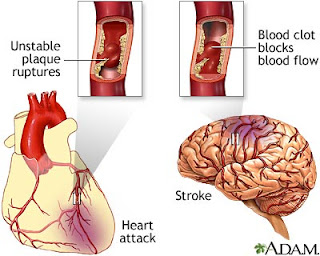
A stroke, previously known medically as a cerebrovascular accident (CVA), is the rapidly developing loss of brain function(s) due to disturbance in the blood supply to the brain. This can be due to ischemia (lack of blood flow) caused by blockage (thrombosis, arterial embolism), or a haemorrhage (leakage of blood). As a result, the affected area of the brain is unable to function, which might result in an inability to move one or more limbs on one side of the body, inability to understand or formulate speech, or an inability to see one side of the visual field.

A stroke is a medical emergency and can cause permanent neurological damage, complications, and death. It is the leading cause of adult disability in the United States and Europe and the second leading cause of death worldwide. Risk factors for stroke include old age, hypertension (high blood pressure), previous stroke or transient ischemic attack (TIA), diabetes, high cholesterol, cigarette smoking and atrial fibrillation. High blood pressure is the most important modifiable risk factor of stroke.


Stroke

Stroke Nursing Assessment
  1. Changes in level of consciousness or responivitas as evidenced by the movement, refused to change its position and response to stimulation, oriented to time, place and person
  2. Whether or not a volunteer or involuntary limb movements, muscle tone, posture, and head position.
  3. Neck stiffness.
  4. The opening of the eyes, the comparative size of the pupil, and pupil reaction to light and ocular position.
  5. The color of the face and extremities, skin temperature and humidity.
  6. The quality and frequency of pulse, respiration, arterial blood gases as indicated, body temperature and arterial pressure.
  7. Ability to speak
  8. The volume of fluid you drink and the volume of urine released every 24 hours.

Stroke Nursing Diagnosis
  1. Impaired verbal communcation
  2. Impaired physical Mobility
  3. Anxiety [specify level]
  4. Deficient knowledge regarding diagnosis, prognosis, and treatment options
  5. Risk for disturbed Body Image
  6. Risk for ineffective Sexual Pattern
  7. Self-Care Deficit [specify]
  8. Disturbed Sensory Perception (specify)
  9. Disturbed Thought Processes
  10. Risk for Injury/Trauma

Nursing Care Plan for Anemia


NCP for Anemia
Nursing Care Plan for Anemia

NCP for Anemia


Anemia

Anemia is a medical condition in which the red blood cell count or hemoglobin is less than normal. The normal level of hemoglobin is generally different in males and females. For men, anemia is typically defined as hemoglobin level of less than 13.5 gram/100ml and in women as hemoglobin of less than 12.0 gram/100ml. These definitions may vary slightly depending on the source and the laboratory reference used.

Anemia Symptoms

Clinical symptoms that appear to reflect dysfunction of various systems in the body such as decrease in physical performance, impaired neurologic (nerve), which is manifested in changes in behavior, anorexia (emaciated body), and abnormal cognitive development in children. Often, too, growth abnormality, epithelial dysfunction, and reduced gastric acidity.

An easy way to know anemia with 5 signs: weak, tired, lethargic, tired, negligent. If it appears five of thesesymptoms, we can be sure a person has anemia. Another symptom is the appearance of sclera (white color on the lower eyelid).

Anemia can cause fatigue, weakness, lack of energy and the head was floating. If the anemia gets worse, can cause a stroke or heart attack.
Source : http://signssymptoms.blogspot.com/2011/04/anemia-symptoms.html

Nursing Assessment for Anemia
Assessment of patients with anemia (Doenges, 1999) include :
  1. Activity / rest
    Symptoms :
    fatigue, weakness, general malaise. Lost productivity: a reduction in enthusiasm for work. Low exercise tolerance. The need for sleep and rest more.
    Signs :
    tachycardia / takipnae; dyspnea during work or rest. Lethargy, withdrawn, apathetic, lethargic, and less interested in its surroundings. Muscle weakness, and decreased strength. Ataxia, the body is not upright. Shoulders down, slumped posture, slow, and other signs that indicate fatigue.
  2. Circulation
    Symptoms :
    A history of chronic blood loss, such as chronic gastrointestinal bleeding, heavy menstruation, angina, CHF (due to excessive cardiac work). History of chronic infective endocarditis. Palpitations (tachycardia compensation).
    Signs :
    Blood pressure: systolic to diastolic steady improvement, and widening pulse pressure, postural hypotension. Dysrhythmias: ECG abnormality, ST segment depression and T wave leveling or depression; tachycardia. The sound of the heart: systolic murmur. Extremity (color): pale skin and mucous membranes (conjunctiva, mouth, pharynx, lips) and the base of the nail. (Note: in black patients, white may appear to be grayish). Leather like waxy, pale or bright lemon yellow. Sclera: blue or pearly white. Slow capillary filling (decreased blood flow to the capillary and vasoconstriction compensation) nails: easily broken, shaped like a spoon (koilonikia). Hair: dry, easily breaking, thinning, gray hair grow prematurely.
  3. Integrity ego
    Symptoms :
    Religious beliefs / cultural influence treatment options, such as refusal of blood transfusions.
    Signs :
    depression.
  4. Elimination
    Symptoms :
    A history of pyelonephritis, kidney failure. Flatulen, malabsorption syndrome. Hematemesis, stool with fresh blood, melena. Diarrhea or constipation. Decrease in urine output.
    Signs :
    Abdominal distension.
  5. Food / fluid
    Symptoms :
    Decreased dietary input. Painful mouth or tongue, difficulty swallowing (pharyngeal ulcers). Nausea / vomiting, dyspepsia, anorexia. The presence of weight loss. Never satisfied to chew or sensitive to ice, dirt, corn flour, paint, clay, and so forth.
    Signs :
    Tongue looks red meat / subtle deficiency of folic acid and vitamin B12. Dry mucous membranes, pale. Skin turgor: ugly, dry, looks shriveled / lost elasticity. Stomatitis and glositis (deficiency status). Lips: selitis, such as inflammatory lips with the corner of his mouth cracked.
  6. Neurosensori
    Symptoms :
    Headache, throbbing, vertigo, tinnitus, inability to concentrate. Insomnia, decreased vision, and shadows on the eyes. Weakness, poor balance, unsteady legs, paresthesias hands / feet; klaudikasi. The sensation of being cold.
    Signs :
    Sensitive to stimuli, anxiety, depression tend to sleep, apathy. Mental: not able to respond, slow and shallow. Ophthalmic: hemoragis retina. Epitaksis: bleeding from the holes (aplastic). Impaired coordination, ataxia, decreased sense of vibration, and position, positive Romberg sign, paralysis.
  7. Pain / comfort
    Symptoms: abdominal pain, headache
  8. Breathing
    Symptoms :
    A history of tuberculosis, lung abscess. Short of breath at rest and activity.
    Signs :
    Tachypnoea, orthopnea, and dyspnea.
  9. Security
    Symptoms :
    A history of work exposure to chemicals,. History of exposure to radiation, either to treatment or accident. History of cancer, cancer therapy. Not tolerant of cold and heat. Previous blood transfusion. Impaired vision, poor wound healing, frequent infections.
    Signs :
    A low fever, chills, night sweats, general lymphadenopathy. Ptekie and ekimosis(aplastic).
  10. Sexuality
    Symptoms :
    Changes in menstrual flow, such as menorrhagia or amenorrhea. Lost libido (male and female). Imppoten.
    Signs :
    Pale vaginal walls.
Related Articles :

Nursing Diagnosis For Anemia

Nursing Diagnosis for Anemia
  1. Risk of infection related to an inadequate defense, the secondary (decrease in hemoglobin leucopenia, or a decrease in granulocytes (inflammatory response depressed)).
  2. Imbalanced nutrition: Less than body requirements related to the failure to digest or inability to digest the food / nutrient absorption necessary for the formation of red blood cells…….

Nursing Interventions For Anemia

  1. Assess the level of client activity
    Rational: To know the client and the activities undertaken to determine the next intervention.
  2. Put the tools needed client
    Rational: To assist clients in meeting their needs.
  3. Assist patients in active and passive exercises……..


5FMWKASQYQ8N

Nursing Care Plan for Hyperemesis Gravidarum

Hyperemesis gravidarum (HG) is a severe form of morning sickness, with "unrelenting, excessive pregnancy-related nausea and/or vomiting that prevents adequate intake of food and fluids." Hyperemesis is considered a rare complication of pregnancy but, because nausea and vomiting duringpregnancy exist on a continuum, there is often not a good diagnosis between common morning sickness and hyperemesis. Estimates of the percentage of pregnant women afflicted range from 0.3% to 2.0%

Nursing Care Plan for Hyperemesis Gravidarum

Nursing Assessment for Hyperemesis Gravidarum
  1. Activity / rest
    Systolic blood pressure decreases, pulse rate increased by more than 100 times per minute.

  2. Ego Integrity
    Interpersonal family conflicts, economic difficulties, changes in perception about the conditions, unplanned pregnancies.

  3. Elimination
    Changes in consistency; defecation, increased frequency of urination
    Urinalysis: increased concentration of urine.

  4. Food / fluid
    Excessive nausea and vomiting (4-8 weeks), epigastric pain, weight loss (5-10 kg), oral mucous membrane irritation and red, low hemoglobin and hematocrit, breath smelled of acetone, reduced skin turgor, sunken eyes and dry tongue.

  5. Breathing
    Respiratory frequency increased.

  6. Security
    The temperature sometimes rises, weakness, icterus and may lapse into a coma.

  7. Sexuality
    Cessation of menstruation, when a state endangering the mother carried a therapeutic abortion.

  8. Social Interaction
    Changes in health status / stressors of pregnancy, changes in roles, the response of family members that can be varied to hospitalization and illness, the less support system.

  9. Learning and education
    • Everything is eaten and drunk vomited, especially if lasts long.
    • Weight loss of more than 1 / 10 of normal body berast
    • Skin turgor, dry tongue
    • The presence of acetone in the urine.


Nursing Diagnosis and Intervention : Imbalanced Nutrition - Less Than Body Requirements for Hyperemesis Gravidarum


Nursing Diagnosis for Hyperemesis Gravidarum

Imbalanced Nutrition: Less Than Body Requirements related to the frequency of excessive nausea and vomiting.


Nursing Intervention for Hyperemesis Gravidarum

1. Restrict oral intake until the vomiting stops.
Rationale: Maintaining a fluid electrolyte balance and prevent further vomiting.

2. Give the anti-emetic drugs are prescribed.
Rationale: Preventing vomiting and maintain fluid and electrolyte balance.

3. Maintain fluid therapy can be saved.
Rationale: Correction of hypovolemia and electrolyte balance.

4. Record intake and output.
Rationale: Determining hydration fluids, and spending through vomiting.

5. Encourage to eat small meals but often
Rational: Can adequate intake of nutrients your body needs.

6. Advise to avoid fatty foods
Rational: fatty foods can stimulate nausea and vomiting.

7. Encourage to eat a snack such as crackers, bread and tea (hot) warm before waking up at noon and before bed.
Rational: snack can reduce or prevent nausea, vomiting, excessive excitatory.

8. Record intake, if oral intake can not be given within a certain period.
Rationale: To maintain a balance of nutrients.

9. Inspection of irritation or Iesi the mouth.
Rational: To know the integrity of the oral mucosa.

10. Review oral hygiene and personal hygiene and the use of oral cleaning fluid as often as possible.
Rationale: To maintain the integrity of the oral mucosa.

11. Monitor hemoglobin levels and Hemotokrit
Rationale: To identify the potential presence of anemia and decreased oxygen-carrying capacity. Clients with Hb levels less than 12 mg / dl or hematocrit levels are low, consider-trimester anemia I.

12. Urine Test against acetone, albumin and glucose ..
Rationale: Establish baseline data; done routinely to detect potential high-risk situations such as inadequate intake of carbohydrates.

13. Measure uterine enlargement
Rationale: Malnutrition mother affects fetal growth and aggravate the decrease in the complement of brain cells in the fetus, resulting in deterioration of fetal development and the possibilities further.

Nursing Diagnosis and Intervention : Imbalanced Nutrition - Less Than Body Requirements for Hyperemesis Gravidarum

Nursing Care Plan for Prostatectomy


Nursing Care Plan for Prostatectomy

Prostatectomy

A prostatectomy is the surgical removal of all or part of the prostate gland. Abnormalities of the prostate, such as a tumour, or if the gland itself becomes enlarged for any reason, can restrict the normal fassessment

Nursing Assessment for Prostatectomy
  1. Subjective data:
    • Patients complain of pain at the incision.
    • Patients said they could not have sex.
    • Patients are always asking about the action taken.

  2. Objective Data:
    • There is the incision
    • Tachycardia
    • Restlessness
    • Blood pressure increases
    • Facial expressions of fear
    • Installed catheterlow of urine along the urethra.

Nursing Diagnosis for Prostatectomy

Acute Pain related to muscle spasm spincter


Goal :
After treatment, patients were able to adequately maintain a degree of comfort.

Expected outcomes:
  • Verbally patient expresses pain diminished or disappeared.
  • Patients can rest easy.

Nursing Intervention for Prostatectomy
  • Assess pain, note the location, intensity (scale 0-10)
  • Monitor and record the presence of pain, the location, duration and precipitating factors as well as pain relievers.
  • Observation of non-verbal signs of pain (anxiety, forehead wrinkle, increased blood pressure and pulse)
  • Give a warm ompres the abdomen, especially the lower abdomen.
  • Instruct patient to avoid stimulants (coffee, tea, smoking, abdominal strain)
  • Set the position of the patient as comfortable as possible, teach relaxation techniques
  • Perform therapeutic treatment of aseptic
  • Report your doctor if pain increases.